If you and your neighbour agree on the fence and the cost, put it in writing and get on with it. If you do not agree, the Fences Act 1975 (SA) sets the process: you serve a notice of intention (Form 1 for a new fence, Form 2 for repair or replacement), wait 30 days for a cross-notice, and if you still cannot agree, the Magistrates Court can decide. Costs are usually shared equally for an adequate fence. This is general information, not legal advice.
Everything below comes from the Legal Services Commission of South Australia's Law Handbook chapter on fences and its fencing law FAQ. We build fences; we are not lawyers.
Start with a conversation and a written agreement
There is no general legal obligation to fence land. But once a fence is on the boundary it is jointly owned by both neighbours, whoever paid for it, so you should not remove or replace it without your neighbour's agreement.
If you agree, the Law Handbook suggests a written agreement signed by both of you that sets out the work, the materials, which quote was accepted and how the cost is shared, with the quotes attached.
If you do not agree: the notice process
- Serve a notice of intention. Form 1 is for a new fence where there is none. Form 2 is for replacement, repair or maintenance. The notice sets out the length and position of the fence, the cost, how much you want your neighbour to pay, and the name and address of any contractor.
- Deliver it properly. Give it to your neighbour personally or send it by registered post. If you cannot identify or find the owner, your council or Land Services SA can help, and if you still cannot find them the notice must be displayed prominently on their land.
- Wait 30 days. Your neighbour has 30 days to serve a cross-notice (Form 3) objecting or making counter-proposals. If they do not object in writing within 30 days, they are deemed to have agreed. If you start work before the 30 days are up, without their agreement, you can lose the right to recover their share.
- If there is still no agreement, try mediation, then the Magistrates Court (Minor Civil Claims Division) can decide whether the fence goes up, its type and position, who does the work, and how the cost is shared.
Who pays, and how much
The starting point is that both neighbours benefit equally, so the cost is shared equally. A few things change that:
- Better than adequate. If one neighbour wants a better fence than an adequate one, they pay the difference. An adequate fence is judged by the standard of good fencing in the area and how the land is used.
- Town next to rural. Where residential blocks adjoin rural blocks of more than 0.8 hectares, an adequate fence is the cheaper of the rural and residential options.
- Urgent repairs. If a fence is damaged and urgently needs repair, one owner can go ahead without notice and recover either half the cost or what the other owner would have paid under the notice process, whichever is less.
- Damage. If one owner damages the fence through a wrongful act or negligence, they pay for the repair.
Fencing work costs can include a survey if one is reasonably needed, which matters on rural boundaries where nobody is quite sure where the line runs.
When the Act does not apply
The Act does not apply to some land, including public roads and road reserves, and some Crown and council land. In practice that means a fence along a road frontage is usually yours to pay for. There is nobody next door to share it with.
Other things worth knowing
- Location. A dividing fence should normally sit on the boundary. If its position is in dispute, a survey is the safest answer.
- Access. You need permission to go onto your neighbour's land. If the notice process has been followed, the Law Handbook explains you can serve a letter at least two days before giving the date and time you plan to enter.
- Council approval. Masonry fences over one metre high and most other fences over 2.1 metres (post and wire fences aside) generally need development approval, as can fences near intersections and around pools. Check with your council before you build.
- Free advice. The Legal Services Commission Legal Helpline is 1300 366 424.
Where a fencer fits in
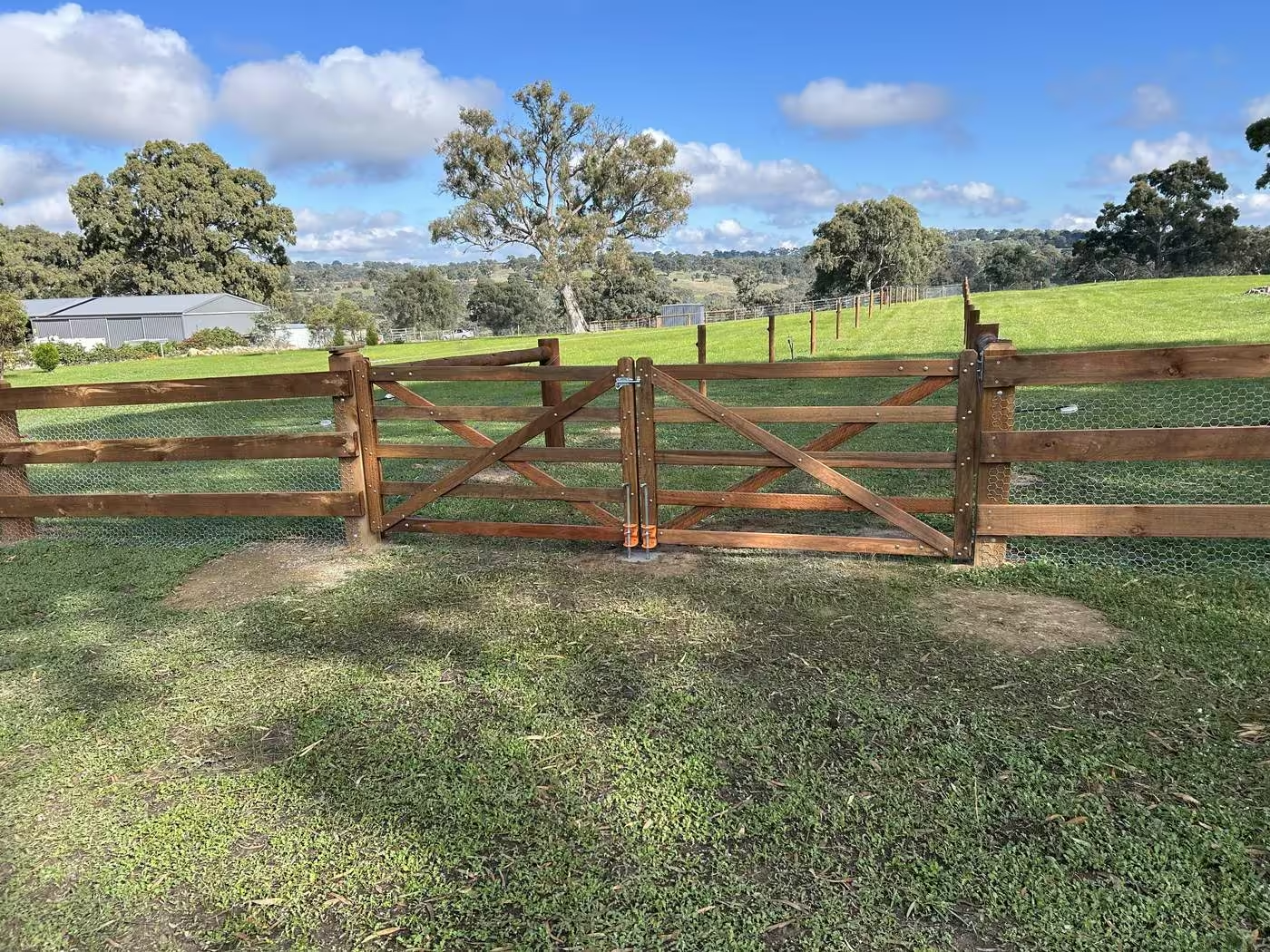
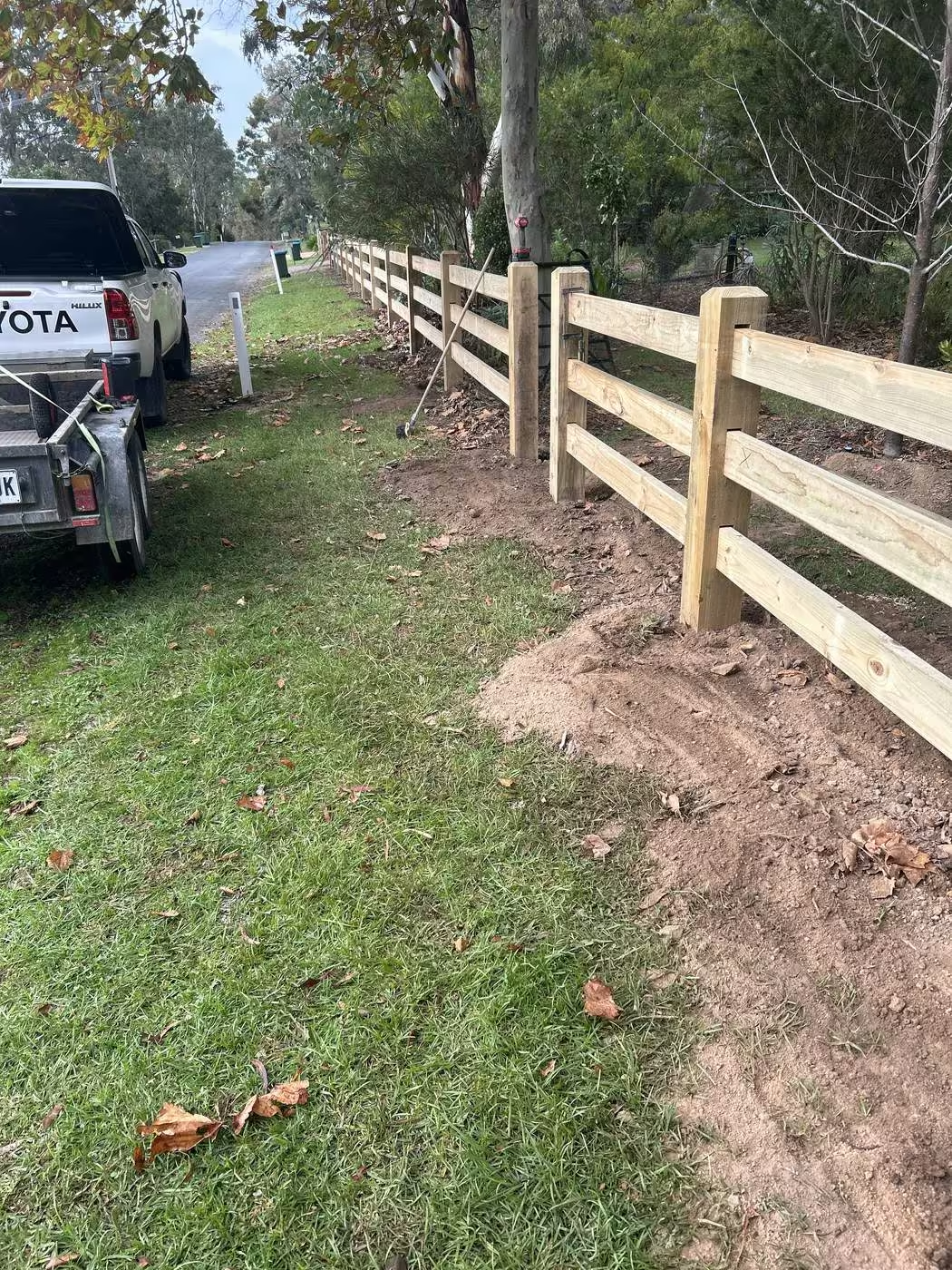
Because the notice has to describe the fence, its cost and the contractor, it helps to get a written quote first. Neil can quote a boundary fence with the length, position and type spelled out, so the figure you put in an agreement or notice matches the job. He builds rural and farm fencing and post and rail for homes in town, with gates to match, around the Barossa Valley, Gawler and the Adelaide Hills. See rural and farm fencing, or what a post and rail fence costs per metre.
Common questions
Does my neighbour have to pay half the fence?
Only if they agree, or you follow the Fences Act 1975 notice process, or the repair is urgent. The starting point is an equal share for an adequate fence; whoever wants a better fence pays the difference.
How long does my neighbour have to respond to a fence notice?
Thirty days from when the notice is served. If they do not serve a written cross-notice in that time, they are deemed to have agreed.
What if I cannot find who owns the land next door?
Ask your council or Land Services SA. If you still cannot find the owner after reasonable enquiries, display the notice prominently on their land and wait 30 days.
Who pays for a fence along a road?
Usually you do. The Fences Act does not apply to public roads and road reserves, so there is no neighbour to share a road frontage fence with.
Where can I get free advice about a fence dispute?
The Legal Services Commission of South Australia Legal Helpline on 1300 366 424 gives free, confidential advice.
Want a price for your job? Call Neil on 0447 044 266 or send a photo through the quote form.