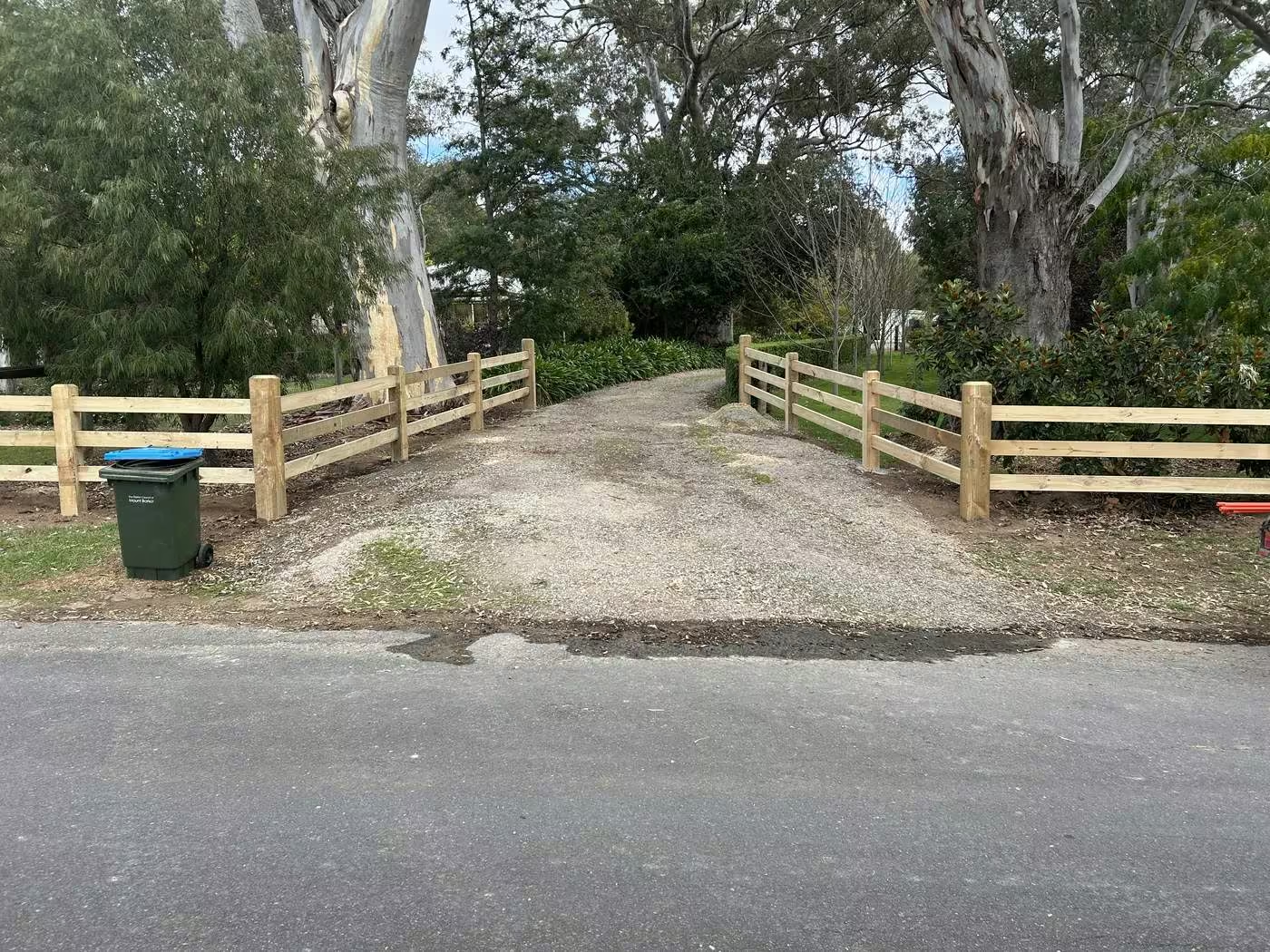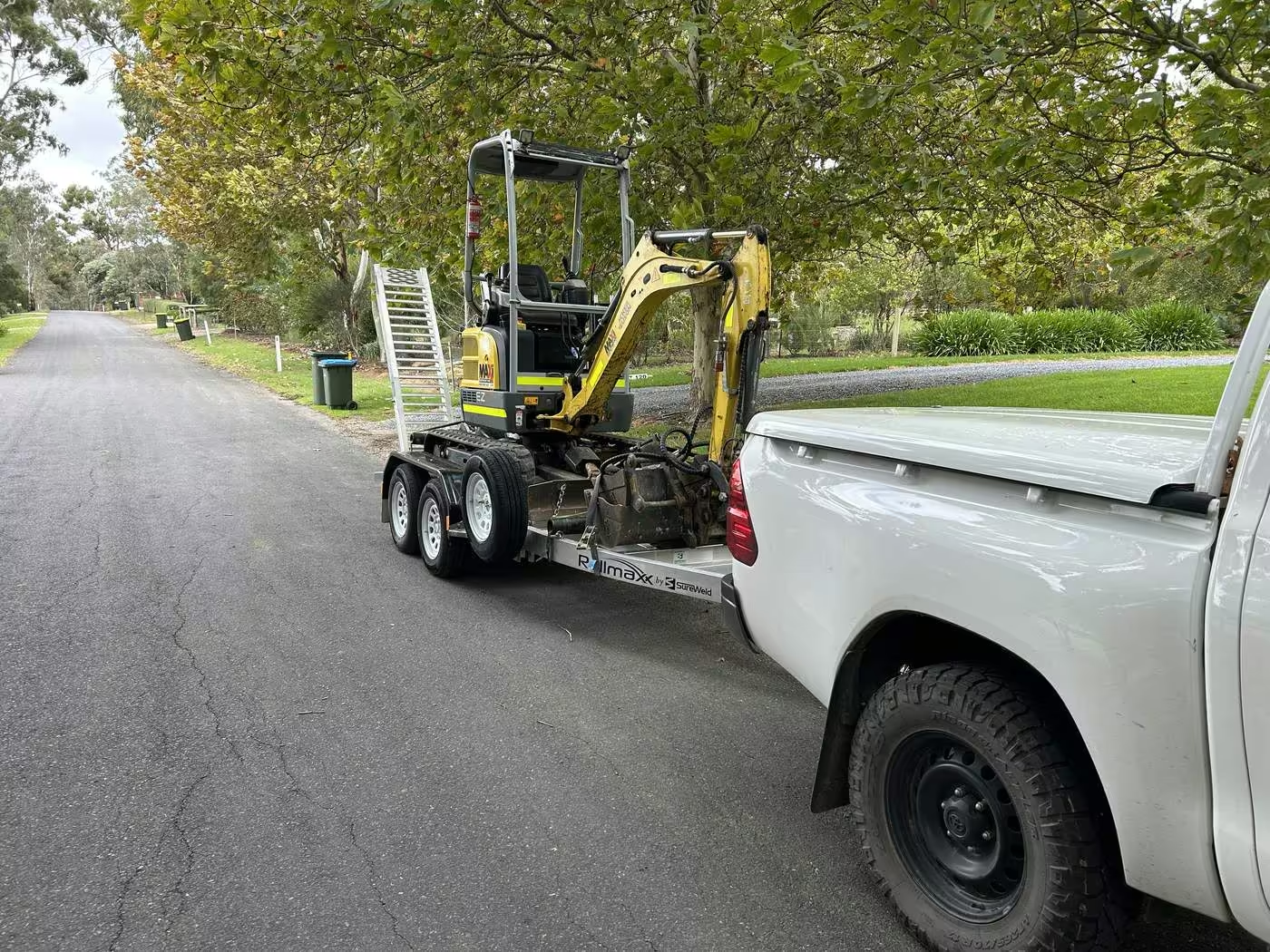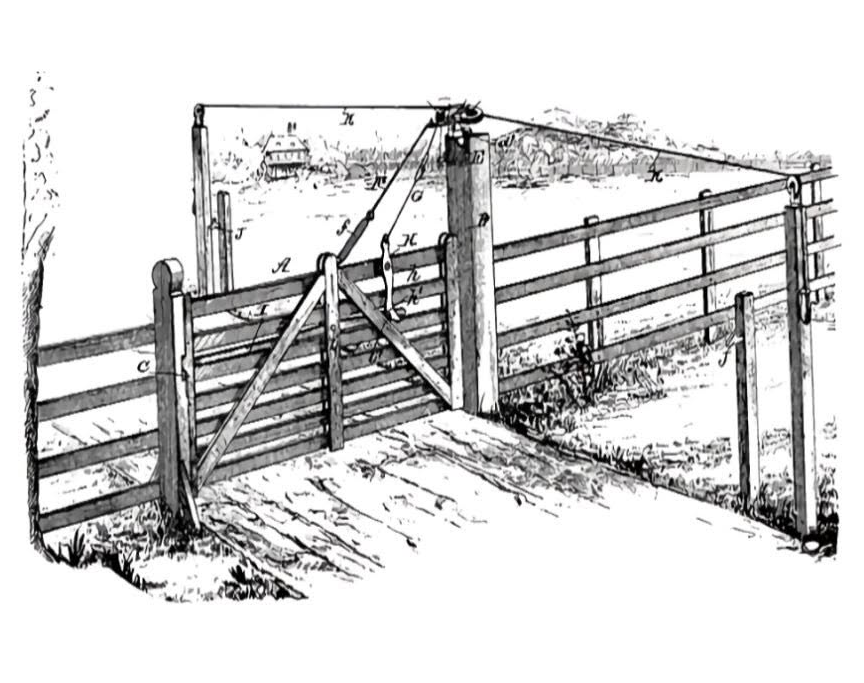
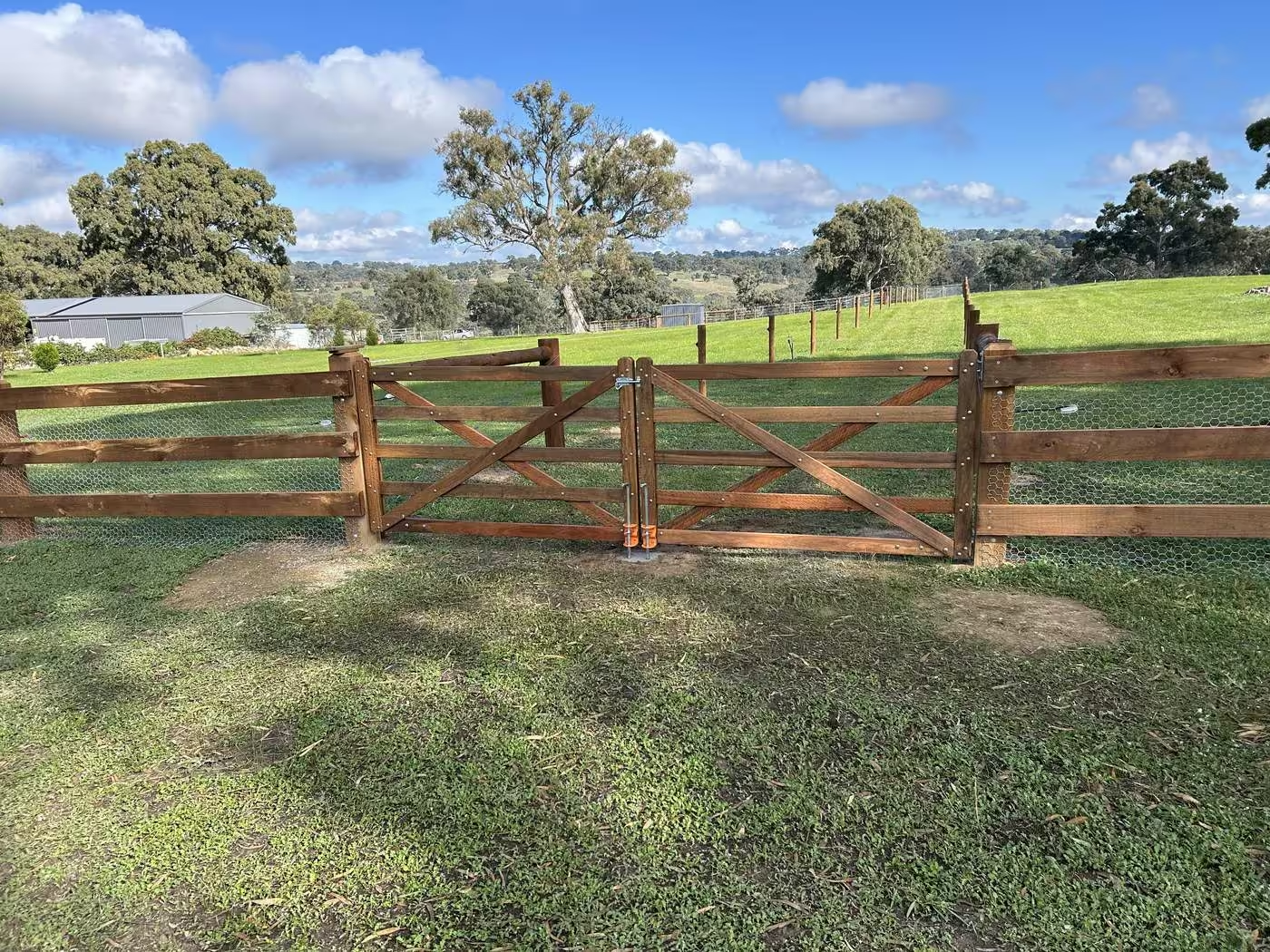
There is no honest single number, because the price per metre depends on the timber, how many rails, the ground, how many corners and gates there are, and access. As a guide, the national cost site Going Rate (pricing reviewed June 2026) puts premium post and rail or horse fencing at roughly $60 to $190 a metre (Going Rate, rural fencing cost). Those are third-party national figures, not our prices. Below is what pushes a job toward either end, and how to get quotes you can compare.
What goes into the price
The timber
Posts are the biggest single material cost. Going Rate lists treated pine H4 posts at about $18 to $32 each for a 2.4 metre, 100 by 100 section, and hardwood posts at about $45 to $90 each (Going Rate, fence post calculator, June 2026). H4 is the treatment level sold for posts that go in the ground. Then there are the rails, and whether you want the timber left natural, stained, or painted white or black.
Neil uses treated timber and machine-bored posts for post and rail, so the rails sit through holes bored in the posts and long runs go in straight and stay that way.
Rails, posts and corners
Three rails cost more than two in timber and labour. Every corner, end and gate opening needs heavier posts set more solidly than the line posts, so a short fence with lots of corners costs more per metre than one long straight run.
The ground
Going Rate notes that terrain is the main labour driver: flat, cleared ground is the baseline, while hills, scrub and especially rock add time for clearing, drilling and setting posts. Around the Barossa and the Hills, ground can change from clay to rock along the same boundary, which is why a fencer will want to see the line or at least photos of it.
Gates in the run
Each gate is its own line on a quote: the gate itself, heavier hanging and latch posts, and hinges and latch. Because Neil builds both, the fence and the gates come out as one job in the same timber and finish.
Old fence, clearing and access
Taking out an old fence, clearing a line, and getting machinery to the site all add time. A clear, accessible line is cheaper per metre than one through trees and old wire.
Post and rail compared with other rural fencing
Post and rail is the dear end of rural fencing. On the same Going Rate page, plain wire stock fencing is listed at roughly $5 to $12 a metre and hinge-joint or ringlock mesh at $10 to $20, against $60 to $190 for premium post and rail or horse fencing. That is why many rural properties use post and rail where it is seen, along the road frontage, the driveway and the house paddock, and something simpler further out.
Fencing for horses
Post and rail is a common choice around horse paddocks and yards because the rails are easy for horses to see and there is nothing sharp on it. If horses are going in, tell us when you ask for a quote, because rail spacing and whether to add mesh depend on the horses and what is next door.
How to get quotes you can compare
- Measure the run. A rough length from pacing it out or a map measuring tool is enough to start.
- Mark the corners and gates. A quick sketch with corners, ends and gate openings (and their widths) saves a lot of back and forth.
- Send photos of the line. Slope, trees, rock and old fencing all show up in a photo.
- Say what it is for. Stock, horses, a front boundary, or just a driveway that looks right.
- Ask what is included. Removal of the old fence, number of rails, post size and spacing, the finish, and the gates.
- Check if it is a dividing fence. If it runs along a neighbour's boundary, they may share the cost. See how dividing fences work in SA.
Quotes that list those things can be compared fairly. A per-metre price on its own cannot.
Post and rail around the Barossa and the Hills
Neil builds rural and farm fencing and post and rail for homes and driveways from his base in Angaston, across the Barossa Valley, the Adelaide Hills and Gawler. See rural and farm fencing.
Common questions
How much does post and rail fencing cost per metre?
It depends on the timber, number of rails, ground, corners, gates and access. The Going Rate guide (June 2026) lists premium post and rail or horse fencing at roughly $60 to $190 a metre, nationally. For a real figure, get a quote for your line.
Treated pine or hardwood posts?
Treated pine H4 posts are made for in-ground use and cost less; Going Rate lists them at about $18 to $32 each against $45 to $90 for hardwood (June 2026). Neil uses treated timber and machine-bored posts for post and rail.
Do I need council approval for a post and rail fence?
Usually not for a typical post and rail fence. The Legal Services Commission notes that masonry fences over one metre and most other fences over 2.1 metres generally need development approval, as do some fences near intersections and around pools. Check with your council.
Will my neighbour pay half of a boundary fence?
Often, for an adequate fence, but only if they agree or the Fences Act 1975 notice process is followed. Fences along a road are not shared.
Want a price for your job? Call Neil on 0447 044 266 or send a photo through the quote form.