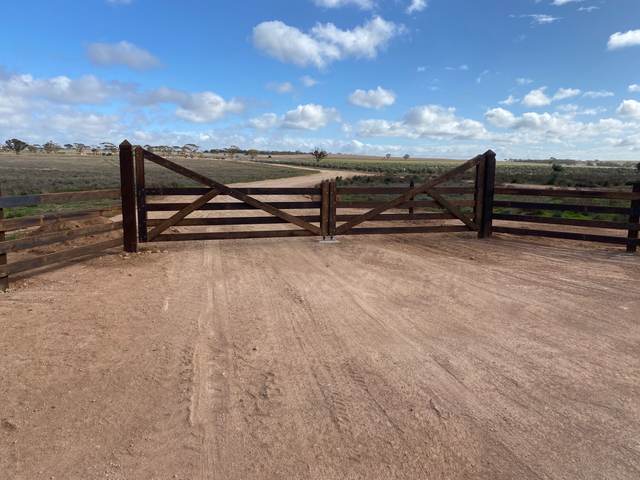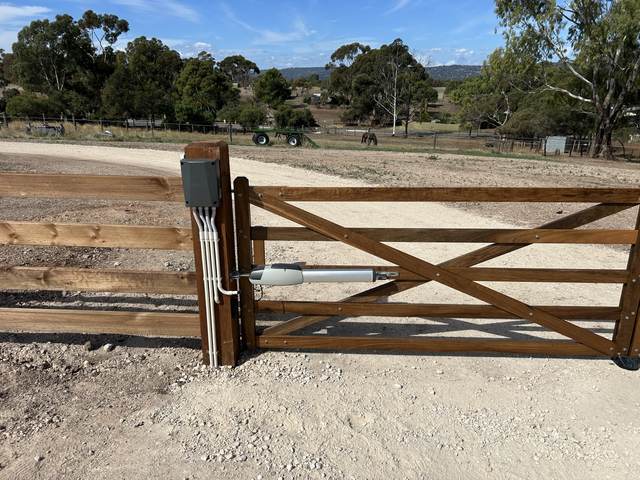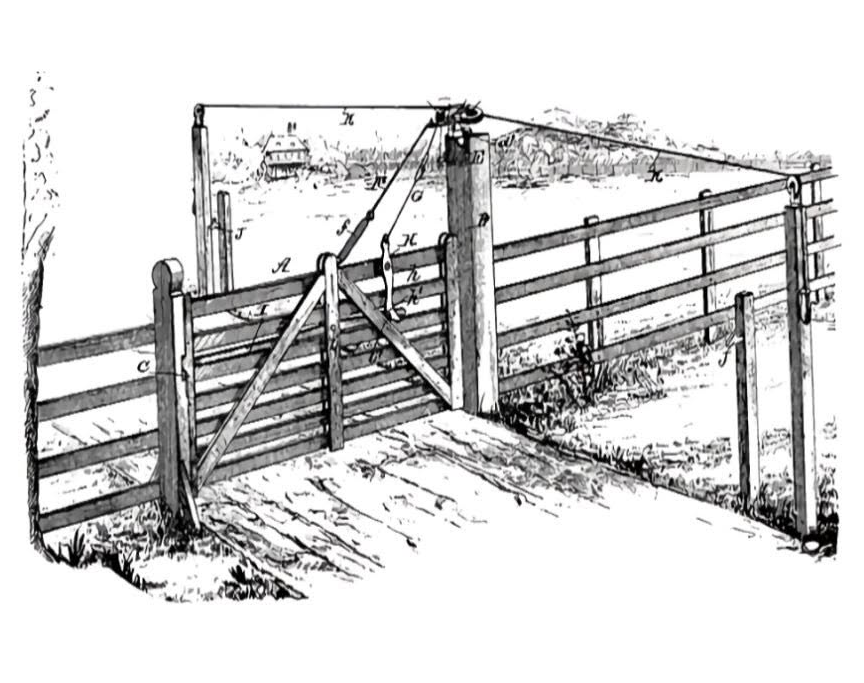
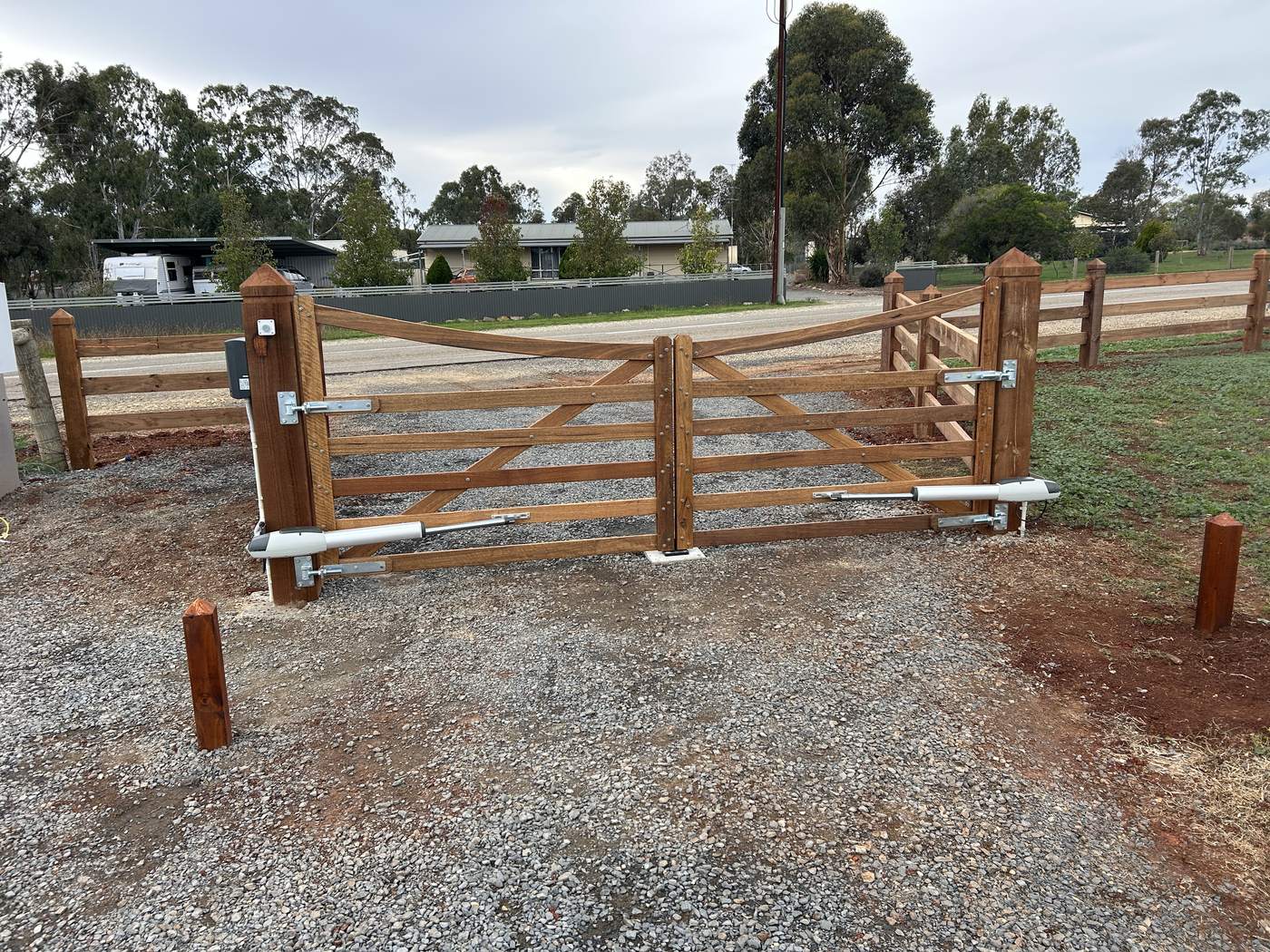
A solar gate opener runs the gate motor off a battery at the gate, and a small solar panel keeps that battery topped up. It is the usual answer when the gate is too far from the house to run mains power out to it. It works well when the kit is sized for how often the gate opens and for short winter days, the panel gets clear sun, and the safety side (obstacle detection and force settings) is set up properly.
How a solar gate opener works
There are four parts. A solar panel on a post or on the gate pillar charges a battery, which sits in a weatherproof control box with the controller board and radio receiver. The box runs a low-voltage gate motor: an arm-style motor for a swing gate, or a geared motor driving a rack for a sliding gate.
The motor only draws heavy current while the gate is moving. The rest of the day the battery is still feeding the receiver, the keypad, any intercom and any safety beams. Those small loads run around the clock, so they matter as much as the motor when you size the system.
Solar or mains power?
If there is already power near the gate, mains is simple. If the gate is a few hundred metres down the drive, getting power there means a trench, conduit and cable, and in South Australia new electrical work has to be done by a licensed electrician (Consumer and Business Services).
For a rough feel of the trade-off, the national cost guide Going Rate (pricing reviewed June 2026) puts a new power run to a gate at about $800 to $2,500 depending on distance and whether it crosses a driveway, and solar-and-battery kits at about $600 to $1,200, noting solar suits gates that cycle fewer than about fifteen times a day (Going Rate, automatic gate cost). Those are third-party national figures, not our prices. Every gate is different, so we quote each one.
On a rural block the deciding question is usually distance. A gate at the road, well away from the house, is usually a solar job.
Sizing it for a Barossa winter
Summer is easy. The test is a run of short, grey days in June and July, when the sun sits low and the panel gets the least light of the year. A system that copes then will cope all year. When you compare kits, ask about:
- Opens per day. Count a normal day: school runs, deliveries, visitors, you going in and out with the ute. Be honest; a busy farm gate opens a lot more than a weekender's.
- Days without sun. How many days can the battery run the gate, plus the keypad and receiver, with no charge at all?
- Accessories. Every keypad, intercom, beam and light adds standby draw. Add them up before you pick the panel and battery.
- Where the panel goes. It wants to face north with no shade from trees, sheds or the gate pillar at midday in winter. A tree that is no problem in December can shade the panel all afternoon in June.
If the honest answer is a lot of daily use, heavy accessories and a shaded spot, a bigger panel and battery, or mains power, is the better call.
The gate matters as much as the motor
A motor will not fix a gate that drags. Before anything is fitted, the gate should swing or slide freely by hand, without catching the ground or dropping at the latch end. A gate that sags makes the motor work harder, flattens the battery faster and can trip the obstacle detection.
Every motor is rated for a maximum gate length and weight. Solid hardwood gates are heavy, and solid infill catches the wind, so the motor has to be matched to the actual gate, not just the width of the opening. This is one reason Neil builds new entrance gates ready for a motor from the start, and checks an existing gate before retrofitting one. See gate automation and custom gates.
Safety: what the standard covers
The Australian and New Zealand safety standard for electric gate drives is AS/NZS 60335.2.103. The current edition was published in November 2024 and replaces the 2016 edition from November 2027. Its scope includes the hazards of the moving gate itself, and it covers drives used by the public, including on farms, not just household gates.
The main risk with any automatic gate is a person, child or animal being caught between the moving gate and a post, wall or the ground. WorkSafe New Zealand issued an automated gates safety alert after a child was trapped in a gate housing, and recommended controls such as warning signs, a buzzer or flashing light, a pressure-sensitive edge, force limiting with automatic reversal, and an accessible manual release.
On a rural property, think about kids on bikes, dogs, and stock pushing on the gate. Safety beams across the opening and correct force settings are worth having, and you should know how to release the gate by hand if the battery ever goes flat.
Questions to ask before you buy
- What gate length and weight is this motor rated for, and how heavy is my gate?
- How many opens a day, and how many days without sun, is the panel and battery sized for?
- Where will the panel go, and will it be shaded in winter?
- What safety devices are included: beams, obstacle detection, auto-reverse?
- How does the manual release work, and where is the key kept?
- Can a keypad, extra remotes or an intercom be added later?
How we do it
Neil fits swing and sliding gate motors, on mains or solar power, with keypads, remotes, intercoms and safety sensors. He fits them to new gates he builds or retrofits them to a gate you already have. Once it is in, he sets it up, tests it and shows you how to use it before he leaves. He works from Angaston across the Barossa Valley, the Adelaide Hills (including Mount Pleasant) and Gawler.
Common questions
Do solar gate openers work in winter?
Yes, if the panel and battery are sized for winter. Short, cloudy June and July days are the real test, so size the system for how often the gate opens and how many days it must run without sun, and keep the panel out of winter shade.
How many times a day can a solar gate open?
It depends on the panel, the battery, the gate and the accessories. The Going Rate cost guide (June 2026) describes solar kits as suiting gates that cycle fewer than about fifteen times a day. A busier gate may need a bigger system or mains power.
Can a solar opener go on my existing gate?
Usually, yes. Swing and sliding motors can be retrofitted to an existing gate, as long as the gate swings or slides freely by hand and the motor is rated for its length and weight. Neil checks the gate first.
Is there a safety standard for automatic gates in Australia?
Yes. AS/NZS 60335.2.103 covers electric drives for gates, doors and windows, including the hazards of the moving gate. Ask what safety devices come with the kit, such as beams and obstacle detection with auto-reverse.
What happens if the battery goes flat?
The gate stops working on the motor, so it needs a manual release. Ask how the release works and keep the key somewhere you can find it.
Want a price for your job? Call Neil on 0447 044 266 or send a photo through the quote form.