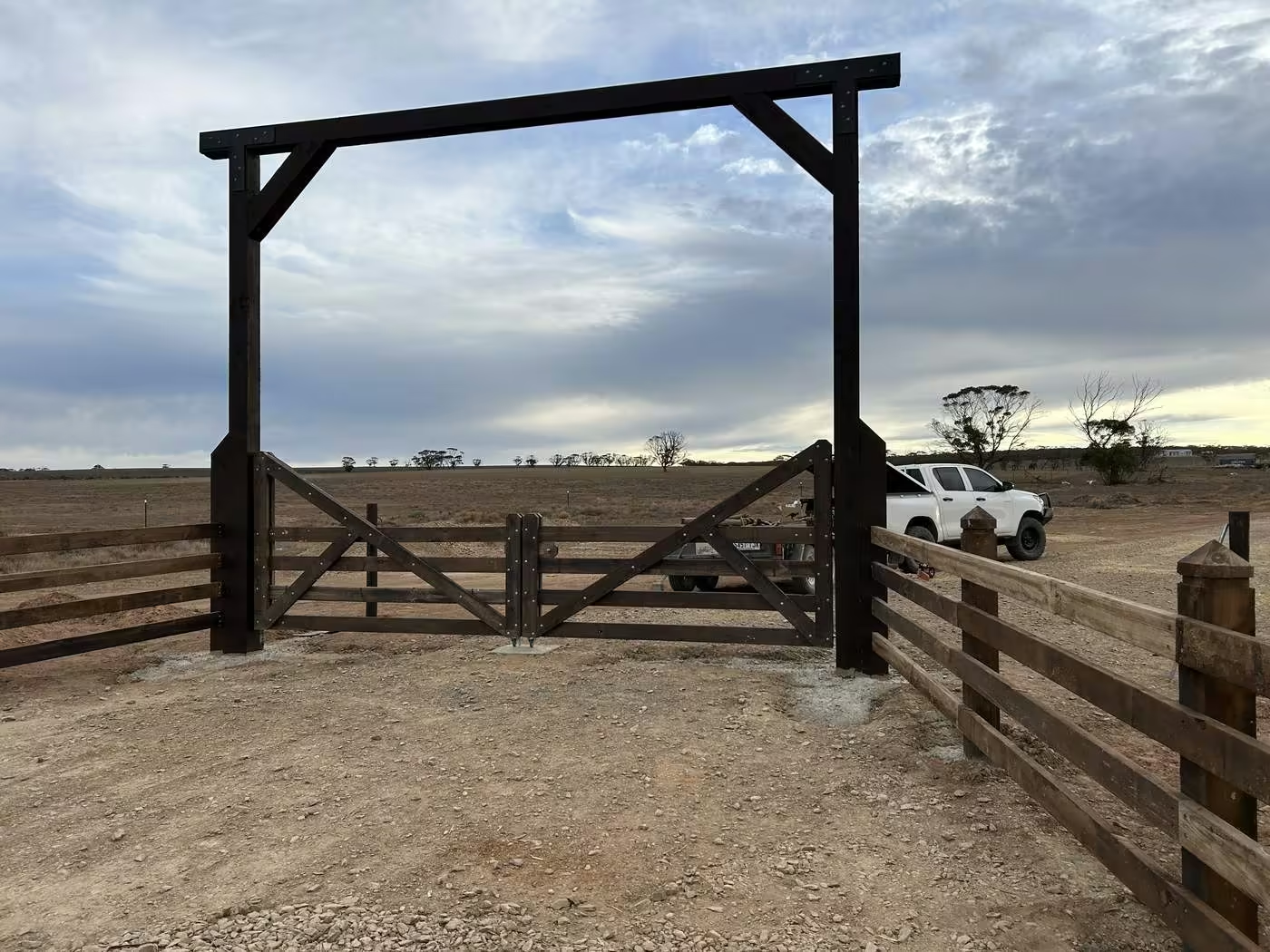
A good rural entrance gate is built to the width of your opening, hung on posts strong enough to carry it, and framed by fencing that matches. Most farm and acreage entrances suit a pair of braced timber gates meeting in the middle, often with a curved top rail and post and rail wings either side. An overhead entrance frame, a painted or stained finish, or steel for a modern house can all change the look. If you think you might want an automatic gate later, plan for the motor before it is built.
Start with the opening
Everything about an entrance gate starts with the gap it has to close. Measure post to post, and think about what will come through it: cars, a horse float, a truck, a header or a stock trailer. A wide opening is usually better as a pair of gates than one long leaf, because each leaf is lighter, sags less and needs less room to swing. Our farm gate guide goes through widths for machinery and stock.
Look at the ground too. If the driveway rises just inside the gate, leaves that swing inward can hit the slope. In that case a different hanging, gates that swing out, or a sliding gate may suit better. Sliding or swing gate covers how to decide.
Shape: straight, braced or curved
The shape of the top rail sets the character of the whole entrance.
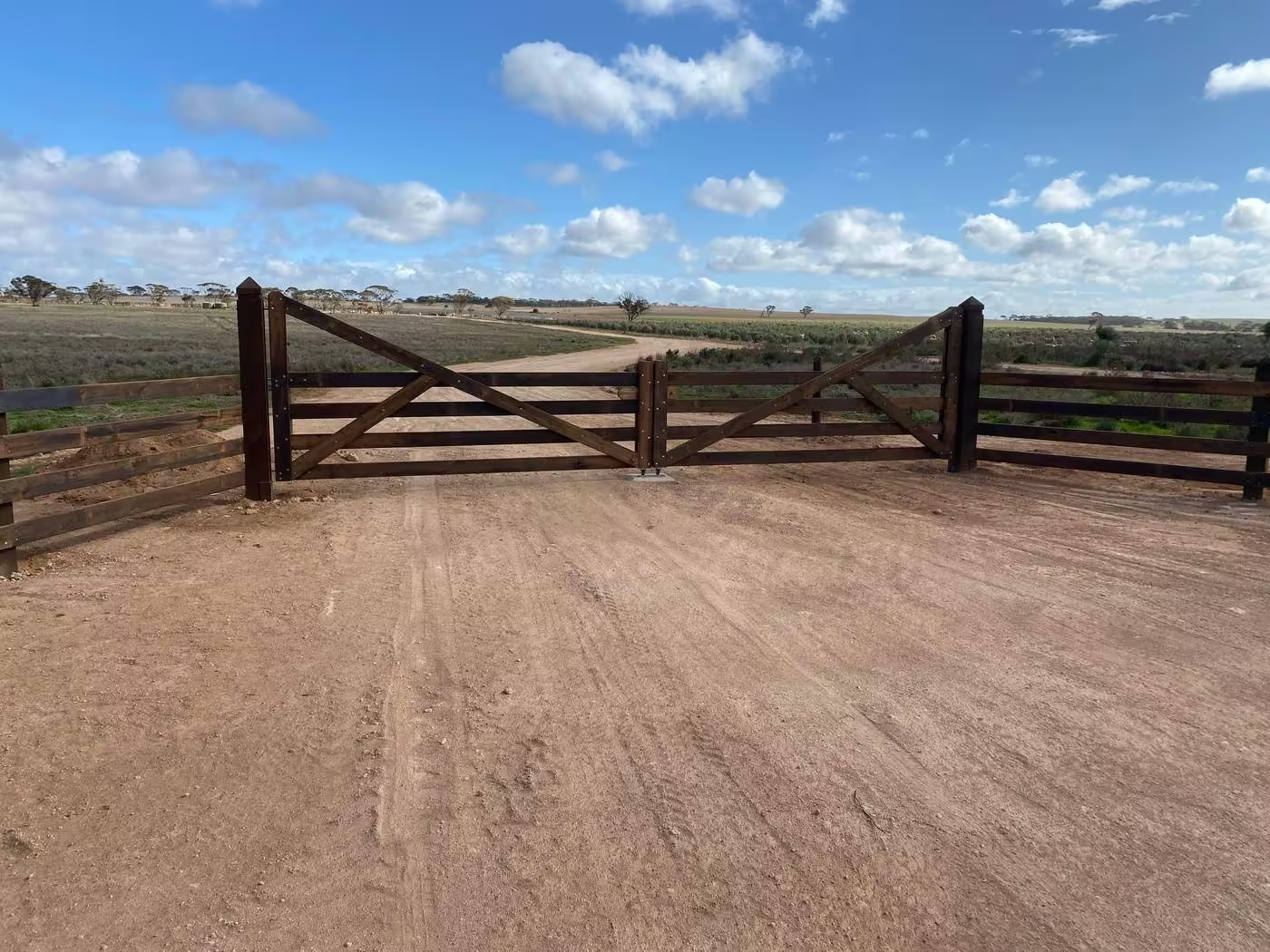
- Straight top rail with a diagonal brace. The classic farm look. The brace runs from the bottom of the hinge side up to the top of the latch side, so the weight is carried back to the hinge post and the gate stays square.
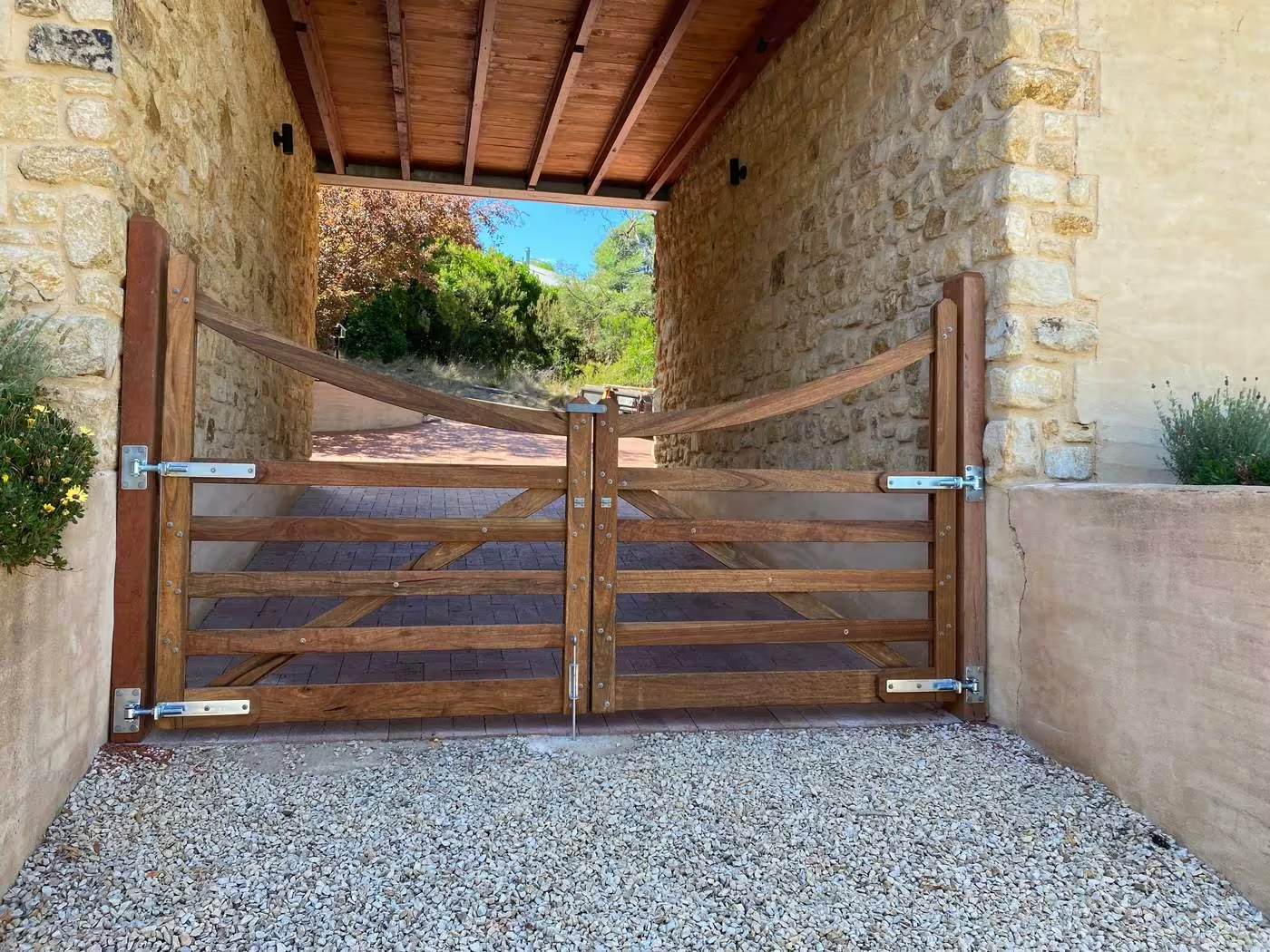
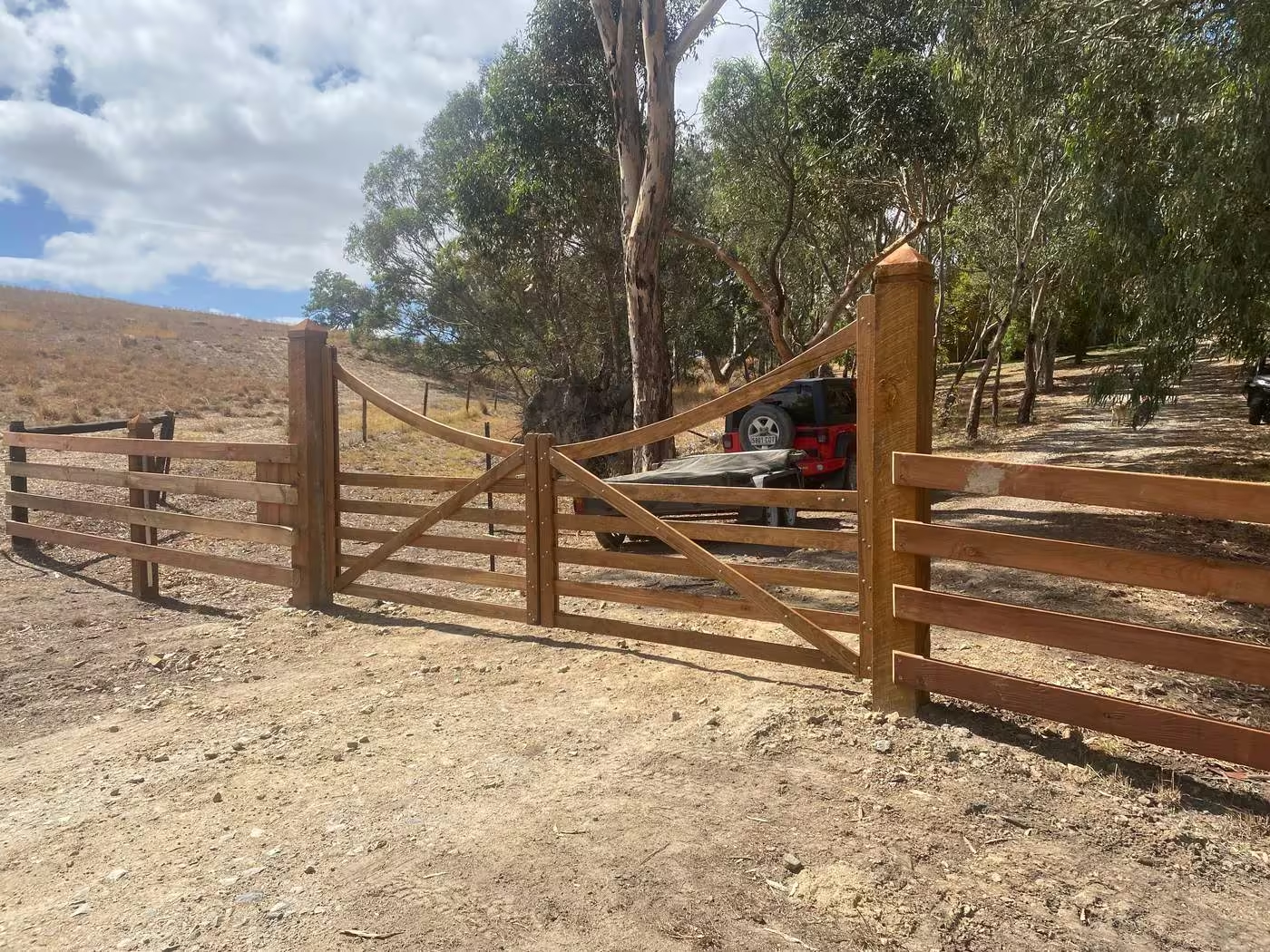
- Curved top rail. A lot of Neil’s entrance gates have one. As a pair, the two curves rise or dip to meet in the middle, which makes a driveway look finished without being fussy.
- Welsh-style. Neil built a pair of Welsh-style gates in spotted gum with a curved top rail for a stone entrance, oiled to protect the timber. He used a roof-mounted camera to get the bracing right.
Framing the entrance
The gate is only part of the entrance. What sits either side of it makes as much difference.
- Post and rail wings. A short run of post and rail angling out from each gate post frames the driveway and guides cars in. Because Neil builds the fencing too, the gates and rails come out in the same timber and finish.
- An overhead entrance frame. Two tall posts joined by a beam across the top make a proper farm entrance, and can be left natural or stained black.
- Brick or stone pillars. Timber gates can be hung between existing brick pillars or set into a stone entrance, as long as the fixings into the masonry are strong enough for the weight.
- A cattle grid. On a working property, double gates can be hung over a cattle grid so you can leave them open day to day and close them when you need to.
Timber, steel and finishes
Most of what Neil builds is hardwood timber, with spotted gum his go-to. Spotted gum is heavy, dense and hard-wearing (WoodSolutions lists its seasoned density at around 990 kilograms per cubic metre), which is why a well-made timber gate feels solid, and why it needs a strong hanging post. Oil protects the timber and keeps its colour. Left untreated, timber greys off in the sun, which some people like on a farm entrance.
Painted gates are another option. White double gates on a gravel drive, or black-painted post and rail running into the gates, both suit a homestead. Steel goes in where it suits the job and can be hot-dip galvanised or powder-coated in a colour to match the house. Timber vs steel gates compares the two.
Plan for a motor from the start
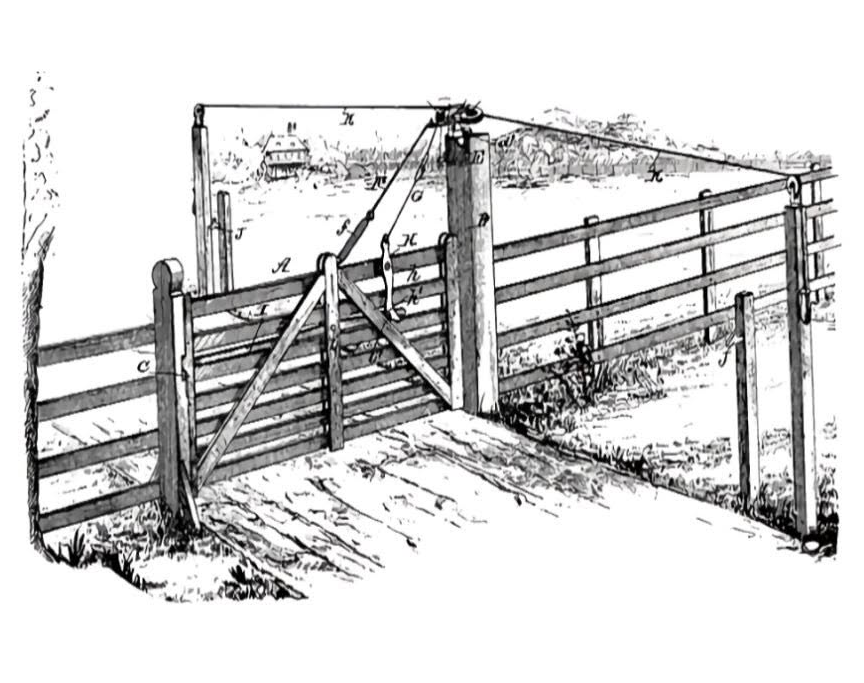
An entrance gate is the one most people end up automating, so it is worth deciding early. Neil can set entrance pairs up for a motor from the start, and fits swing and sliding gate motors to gates he builds and to gates you already have. Solar motors suit gates a long way from the house.
Planning ahead means the posts are sized for a motor arm, there is somewhere sensible for the control box, and conduit can go in before the driveway is finished. A keypad on its own post and a set of remotes let you open the gate without getting out of the car. See gate automation, and our guide to gate keypads, remotes and intercoms for the access side.
What to send for a quote
- The width of the opening, post to post, and roughly how high you want the gate.
- Photos from the road and from inside the property, so the slope and the posts can be seen.
- A photo or sketch of a style you like, even from another property.
- Whether you want post and rail wings, an entrance frame or a motor.
- Whether you want it hung on site, or collected or delivered ready to install.
Neil builds entrance gates in Angaston for properties across the Barossa Valley, the Adelaide Hills and Gawler. See custom gates and fencing, or send Neil a photo for a free quote.
Common questions
Should a farm entrance have one gate or two?
Wide openings usually work better as a pair of gates meeting in the middle. Each leaf is lighter, sags less and needs less room to swing than one long gate across the same opening.
What timber does Neil use for entrance gates?
Mostly hardwood. Spotted gum is Neil's go-to, oiled to protect it, and a lot of his entrance gates have a curved top rail. Steel goes in where it suits the job.
Can the fence and entrance gates match?
Yes. Neil builds the fencing as well as the gates, so post and rail wings, posts and gates can come out in the same timber and finish as one job.
Can an entrance gate be automated later?
Yes. Neil fits swing and sliding motors to existing gates as well as new ones, but planning for the motor before the gate is built makes the job neater.
Want a price for your job? Call Neil on 0447 044 266 or send a photo through the quote form.